geeky NEWS: Navigating the New Age of Cutting-Edge Technology in AI, Robotics, Space, and the latest tech Gadgets
As a passionate tech blogger and vlogger, I specialize in four exciting areas: AI, robotics, space, and the latest gadgets. Drawing on my extensive experience working at tech giants like Google and Qualcomm, I bring a unique perspective to my coverage. My portfolio combines critical analysis and infectious enthusiasm to keep tech enthusiasts informed and excited about the future of technology innovation.
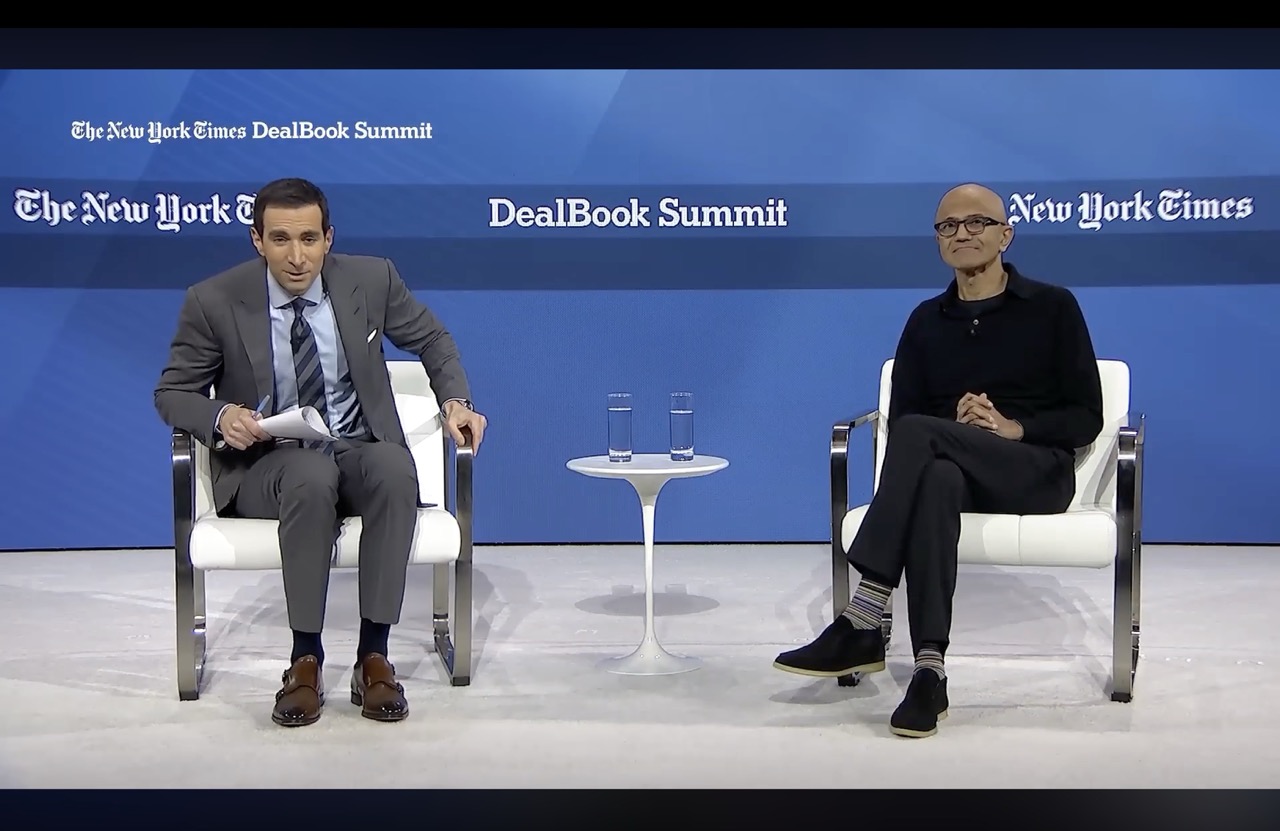
Microsoft CEO Satya Nadella on Outlook Outages, AI Agents Shopping and the Software Factory
AI Summary
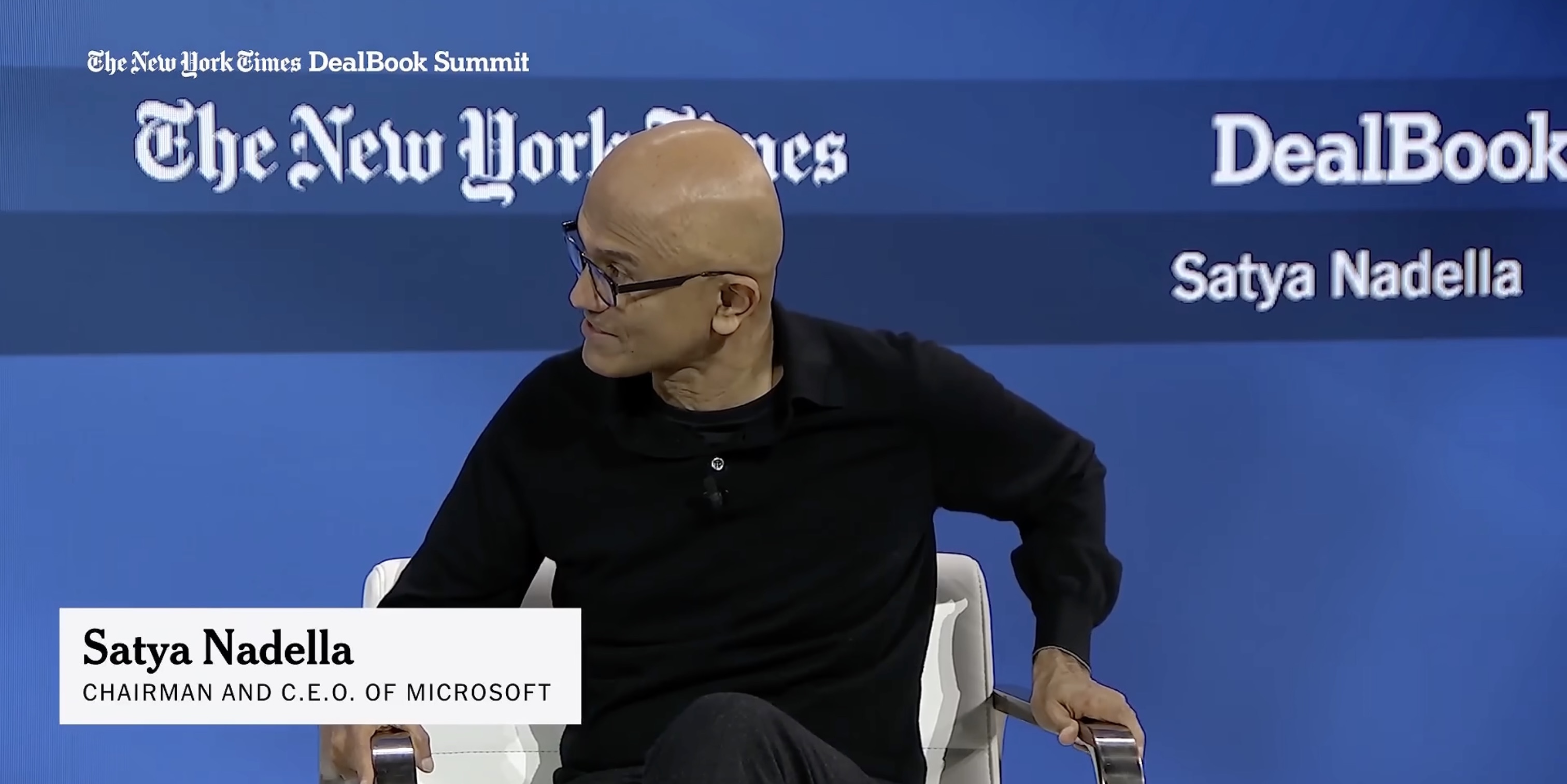
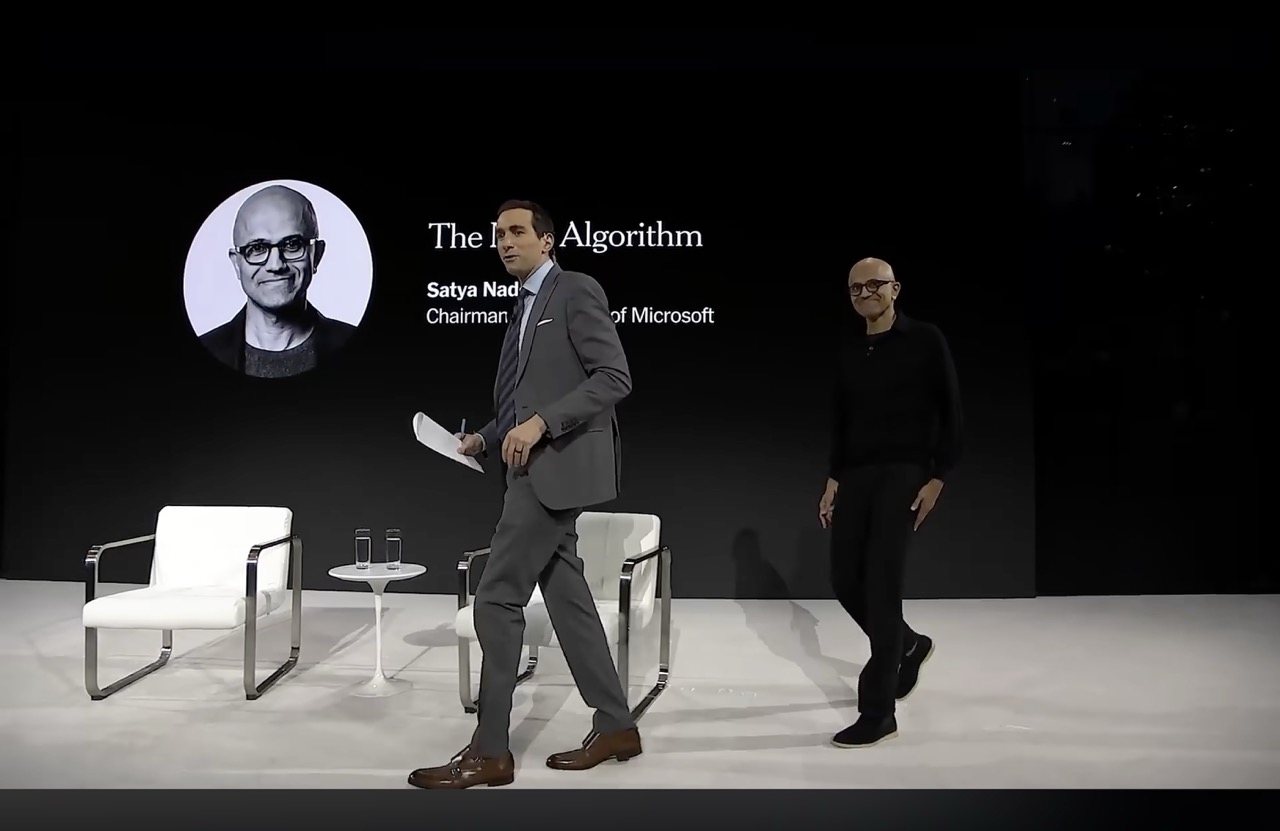
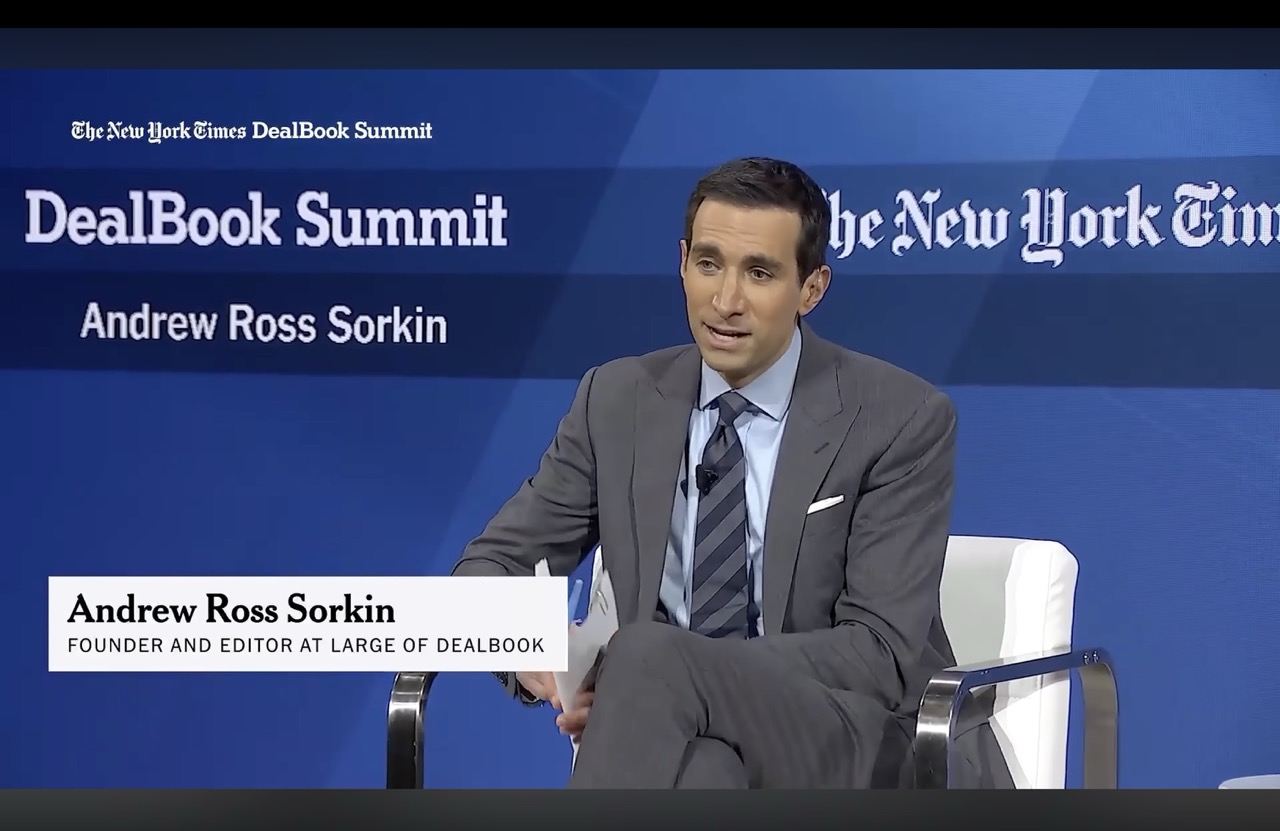
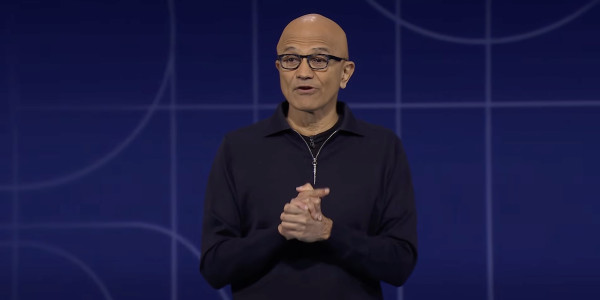
Satya Nadella sat down with Andrew Ross Sorkin at the DealBook Summit just after one of the worst outages Microsoft has had in years. They covered how AI is changing software security, why Microsoft wants to be the neutral system builder between rival AI labs, and what the AI spending boom means for jobs and the economy. The main takeaway is that Nadella is betting on choice and control rather than on any single model.
November 25 2026 12:15
Nadella opened by apologizing for the Outlook outage, then drew a line between it and the bigger risk he wants to talk about. Microsoft's own report blamed a bug introduced in July that sat unnoticed until a traffic spike exposed it, and more than 80 percent of the affected gateway servers stopped responding at the worst point. One odd detail is that newer hardware made the failure worse, while Microsoft's lab tests ran on less powerful machines. Nadella called it a perfect storm and promised to fix the architecture behind it.
The part that matters more, in his view, is what AI does to the ground underneath everyone. Models are now very good at finding vulnerabilities, which means companies have to find and patch them faster than ever. He mentioned three critical patches landing the same day, all in open source packages.
Patching in hours instead of weeks
Nadella described how the old rules no longer hold. If you ran a critical bank system, you used to test a patch for a week. Now a patch may need to move from release to production almost instantly, because attackers are already using the flaw. That speed creates its own instability.
He also pointed to a second shift. The cost of mounting a serious attack has collapsed, so a persistent, government grade attacker can now be pointed at a target by someone sending a message to an agent running in the cloud.
Sorkin asked whether this is a temporary Y2K style adjustment. Nadella said part of him hopes so, but Y2K was one bug and one deadline, and this problem keeps growing as the models improve. He also noted that much of the world's critical infrastructure runs on firmware that cannot be patched at all, such as chillers, HVAC systems and parts of transportation networks, and a lot of it is reachable from the internet. His answer is to modernize, then work out how to detect and defend in real time.
Hedging across models, with Anthropic in the middle
The conversation turned to Anthropic. Microsoft put billions into Anthropic alongside Nvidia, and the offering is the largest IPO on record. Sorkin asked whether Nadella wished he had invested more, then pushed on a harder question. If a cheaper model delivers the same service for five percent of the cost, what happens to the economics of the frontier labs?
Nadella reframed it around the job to be done. For ordinary office work, he argued, models are mostly saturated, and nobody needs a breakthrough in fluid dynamics to run a routine workflow. Copilot picks the model for each task, whether from OpenAI, Anthropic or Microsoft's own MAI family, and most users just leave it on auto. He said GitHub's blended system, which mixes several models, now beats a single leading model on a public benchmark.
He was also blunt about his priorities. He said he cares less about the margins of any one lab, himself included, and more about whether a bank in New York or a retailer in Arkansas can use this technology to grow the economy. He would rather AI behave like cloud computing, a commodity that earns its returns through scale.
The alignment worry and the trust architecture
Nadella has said that scaling alone may not produce aligned models, and Sorkin noted that Sam Altman disagrees. Nadella said he hopes Altman is right, since if alignment does not arrive on its own, "we are in a world of hurt." He had once assumed that if alignment was not solved, at least the models could be debugged by understanding them from the inside, and he does not see either happening yet. So he wants a trust architecture. He listed a few pieces:
Ban models whose chain of thought cannot be read by humans.
Log everything in a way that cannot be tampered with.
Let other models, including non language models, inspect those logs for signs of deception.
Separate authority from intelligence, so a model can think without being able to act freely.
On liability, he was direct. Today it sits with whoever deploys the model, and he expects insurers to eventually price that risk by asking to see the logs. That is the business logic behind Agent 365, Microsoft's control layer for agents, which the company says now tracks more than 50 million registered agents.
Partner, supplier and competitor at once
Microsoft has royalty free access to OpenAI's frontier models through 2032, and Nadella called that a mix of good judgment and luck. His plan is to keep MAI a few months behind the frontier while spending a fraction of the compute, training it on real tasks inside Microsoft 365, GitHub and security products instead of benchmarks.
When Sorkin pointed out that Anthropic's new spreadsheet product competes with Excel, Nadella did not seem bothered. He said the labs are playing a vertical stack game, while Microsoft is playing a model system game. His comparison was to cloud customers, who almost never want a single supplier. He expects enterprises to want the same flexibility with models, much as his own fleet runs Intel, AMD and Microsoft's Cobalt chips.
Jensen Huang and the problem with singular founders
Sorkin asked about Nvidia, where Jensen Huang resigned as CEO and the board named Colette Kress interim chief executive. Nadella called the situation tragic, said he admires Huang and wants to give him space, and expressed confidence in Kress and the wider team. He noted Kress spent years at Microsoft before joining Nvidia in 2013.
His broader view was that founders deserve celebration but are not gods. He told the story of saying to Bill Gates that founders die too, and argued the real test of a founder is whether the institution thrives after they leave. He distrusts any leader who claims the place fell apart once they were gone.
The data center math
Sorkin cited Goldman Sachs, whose analysts expect about $7.6 trillion in AI spending through 2031 across compute, data centers and power. He asked whether the numbers add up, and raised the used car problem, where assets that look valuable in a shortage lose value once supply catches up.
Nadella said Microsoft builds where it can, leases where it makes sense, and rents from neoclouds only when supply is tight. He splits the spending into long term items like land, power and the building shell, and shorter term items like chips and racks, which are more than half the cost and should track demand closely. On depreciation, he pointed out that the useful life of ordinary servers has lengthened over time because software keeps squeezing more out of old hardware, and he expects the same here. On Elon Musk's idea of putting data centers in space, he said he would happily lease capacity if it exists, but Microsoft is focused on the ground.
Agents, commerce and who gets paid
Sorkin asked whether an agent will be allowed onto a site like Amazon, and who holds the leverage. Nadella said agents will get rails for commerce, and he mentioned a treasury arrangement between a Microsoft agent and BNY as an early sign. The key unresolved issue, he said, is liability. He compared the shift to the move from Yahoo to search, which changed who paid whom. Businesses built on human eyeballs and ads may have to move toward payment per click or per transaction, and if one retailer refuses an agent, another will take it.
He used software engineering as his example. The industry went from saying AI would never write software to saying it could do everything, and is now rediscovering that engineers matter, only organized differently. He said the team that builds Cowork is about 11 developers who build a software factory, and the factory builds the product. He expects that extra layer of indirection to spread to every kind of job, and he thinks the hard part will be how fast incumbents can reshape workflows and support the people moving into them. It will take longer than people expect.
Staying in Redmond
Sorkin noted that Nadella has kept a lower political profile than many tech chiefs, even though he received the National Medal of Technology and Innovation from President Trump six weeks ago. Nadella said his job is to earn Microsoft's market and social permission to operate through good products for customers, including the government, and that he would rather be in Redmond than Washington. He joked that he was probably not invited to the inauguration because he is just the head of a little software company.
On how long he plans to stay, having passed 12 years in the job, he answered that he is enjoying it and wants to continue.