geeky NEWS: Navigating the New Age of Cutting-Edge Technology in AI, Robotics, Space, and the latest tech Gadgets
As a passionate tech blogger and vlogger, I specialize in four exciting areas: AI, robotics, space, and the latest gadgets. Drawing on my extensive experience working at tech giants like Google and Qualcomm, I bring a unique perspective to my coverage. My portfolio combines critical analysis and infectious enthusiasm to keep tech enthusiasts informed and excited about the future of technology innovation.
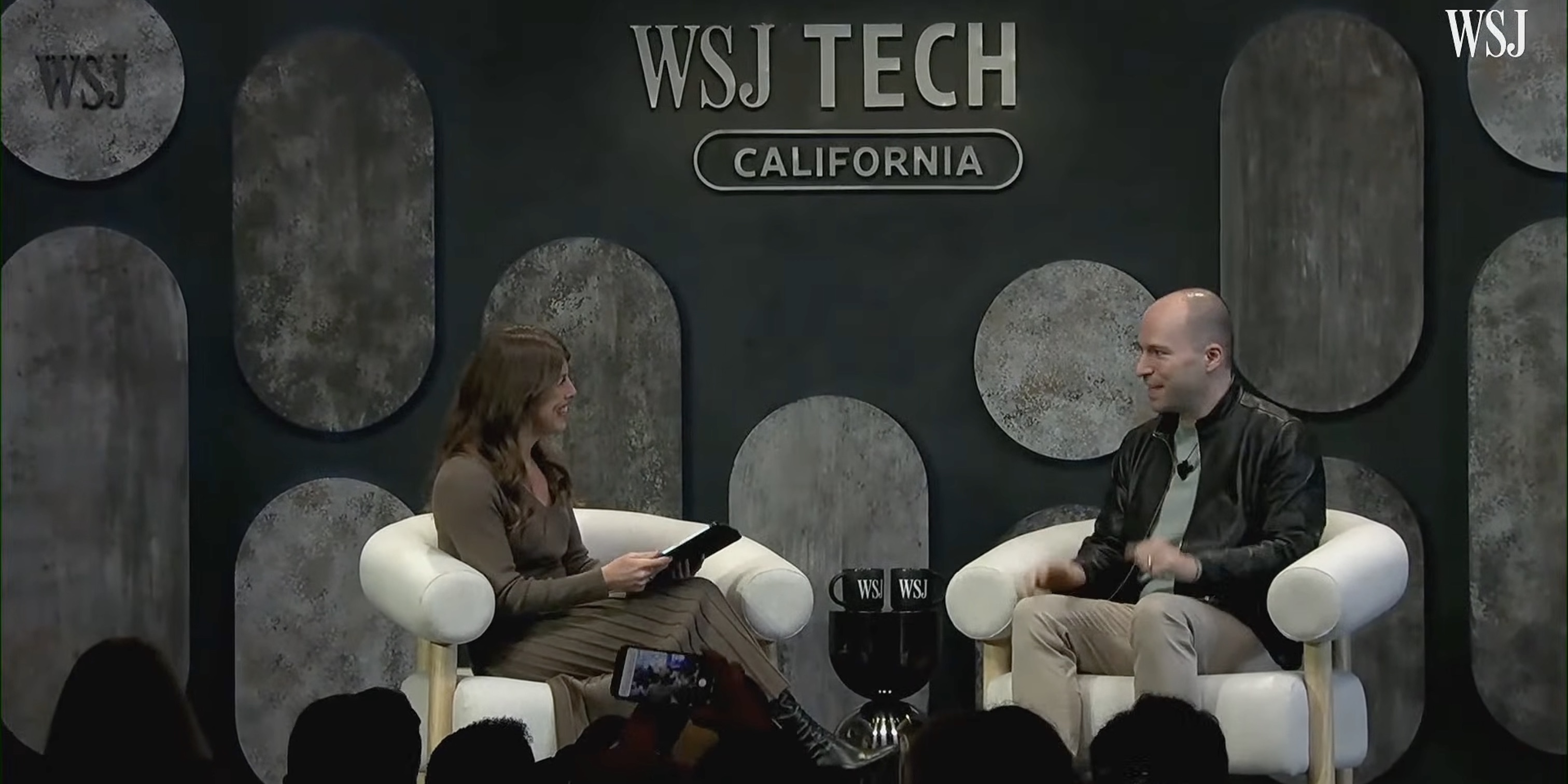
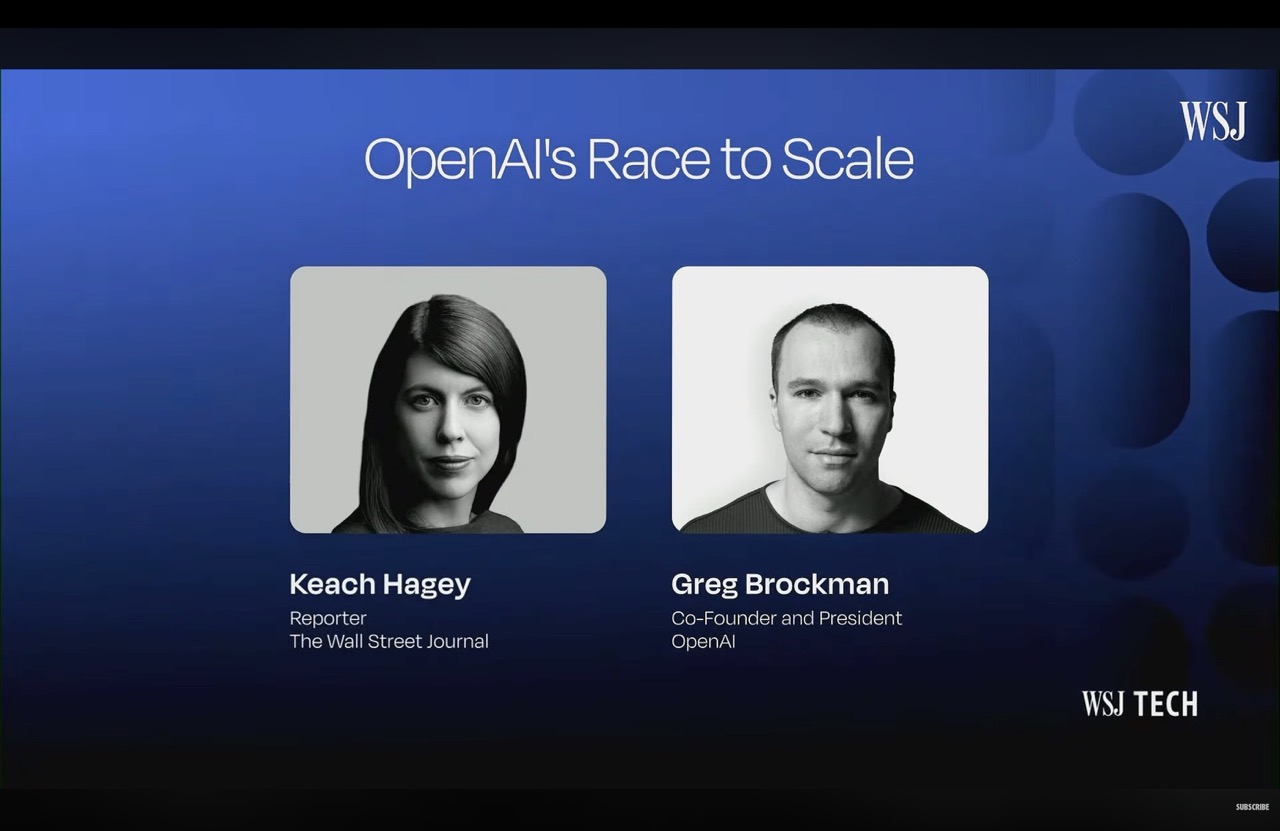
OpenAI's Greg Brockman on Data Centers, Cyber Risk and Catching Anthropic
AI Summary
Greg Brockman sat down with the Wall Street Journal the morning after an election that made data centers a political liability, and he spent half an hour defending OpenAI's way of building, selling and securing AI. The main takeaway is that OpenAI now sees itself as an enterprise company that needs enormous amounts of compute, even as voters, investors and rivals push back on how it gets there.
November 09 2026 04:44
A bad night for data centers, and a calm answer from OpenAI
The interview came a day after Democrats won control of Congress, and the first question went straight at it. Many of the winners had campaigned on pausing data center construction, and the backlash was hard to miss, with candidates flipping governor seats from Maine to Ohio on moratorium pledges. Sen. Bernie Sanders went further and called for a national moratorium, though plenty of Democrats are split on a blanket freeze.
Brockman did not argue with the mood. He said no one could claim they were unsurprised by how unpopular data centers became this year, and that nothing in American politics looks quite like it. His answer was less about messaging and more about presence. You cannot tweet from San Francisco that a project will be good for Texas or Georgia, he said. OpenAI's best programs, in his telling, are the ones where staff move into the community and stay.
He reached for a small town story to make the point. He grew up near Grand Forks, North Dakota, where a sugar beet factory smelled terrible but gave the town jobs and an identity. His argument is that data centers can play the same role if the benefits are real, such as the free student lunches OpenAI is sponsoring in Georgia, and if people can see the technology itself helping their lives.
Earlier this year he told a podcast host that modern data centers use little water and that the opposite claim is misinformation. Facts like that matter, but the political fight is also about electricity bills and who gets a say. OpenAI will need more than facts.
Cybersecurity and the defenders window
The most interesting stretch was about security. Keach Hagey asked whether AI companies have simply swapped a productivity gain for an endless cyber arms race. Brockman said the industry has never funded security properly, joking that no one has ever seen an over resourced security chief, and that the internet was built without security and patched afterward. Forty years of that tech debt is now being exposed, and he thinks the best AI should go to defenders first. OpenAI calls the head start the defenders window.
The day before the talk, OpenAI had published results to back that up. A pipeline built on an unreleased cyber model validated and patched 948 Linux flaws for about $1.2 million in API costs, according to the company. Brockman rounded that to a thousand vulnerabilities and a million dollars, and compared it to the roughly 20 a year he said Linux typically sees from this kind of work. These are local privilege escalation bugs, meaning someone who already has a limited account could gain full control. Axios reported that OpenAI released GPT 6 Cyber to verified users and rated it critical for cyber capability, its highest tier, which tells you the same tools help attackers too.
There is also a patching reality check. By the end of the campaign, OpenAI said 61 of the flaws were already patched upstream, with more under discussion, so the model was partly finding things the community was already closing in on. That does not shrink the achievement, but it is worth knowing before anyone repeats the headline number.
Brockman then floated the idea that has the most potential to start an argument. If servers stay unpatched and risk becoming botnets, perhaps the government could use the vulnerability to apply the patch itself. He called it controversial, admitted a patch could take a service down, and pointed to FBI court orders that have cleared botnet code from private machines several times in the past five years. He said the idea has only been floated with the administration, and that it is one of several on the table. The broader message was that companies will need to patch in days or hours, not quarterly.
Enterprise is now the business
Asked when he realized Anthropic would pass OpenAI in revenue, Brockman did not dodge. He said it was clear early in the year, that the first two quarters were rough, and that in coding OpenAI was not even in the conversation. Then he described a third quarter with about 70 percent growth in annualized revenue, with enterprise revenue doubling. He credited a new frontier model and the launch of ChatGPT Work, and said the gains came from investments made well before the quarter started.
On share, he guessed enterprise was around 30 percent of OpenAI's revenue a while back and is now a majority, while stressing that consumer has kept growing. He announced a partnership with JPMorgan Chase that had not been announced before, covering Codex, cyber models and knowledge work across the bank. His pitch for why that matters is trust. A regulated institution picking OpenAI says something that a consumer download count cannot.
He also described what he learned selling to big companies. Every customer meeting, he said, produces an insight he had not heard put that way, and the job is to help each customer find the milestones that matter and then show up consistently. A year ago, he admitted, buyers asked whether OpenAI was truly committed to enterprise.
The money question
The hardest questions were about funding. Hagey noted that Anthropic is going public first and that OpenAI raised less than half of the $30 billion it targeted in its latest round, at a valuation below the one it hoped for. Brockman answered that OpenAI will go public when the time is right, that he feels good about the business, and that he has never felt more confident. He said he thinks the company will be ready next year.
Then came the efficiency comparison. Anthropic's filing shows it now earns about $2.08 of revenue per compute dollar, up from 40 cents in early 2025, and its filing reported its first operating profit in the second quarter of 2026. Asked how OpenAI stacks up, Brockman gave no number. He talked about repeated efficiency gains instead, including an 80 percent price cut on a lower cost model called Luna that, he said, grew volume more than tenfold.
His strategy is easy to summarize. Frontier models will take most of the dollars, because customers are almost price insensitive when they want the best. Cheaper, high volume models will sit below them at lower margins. Not giving a ratio is a choice, and investors will notice it.
He also pointed to ads, saying OpenAI went from zero to a billion dollars in annualized revenue this year, and to always on products like Dots. He admitted those are expensive to run. His rule is to build the peak experience first, even if it is costly, and then make cheaper versions. As an example, he said his own Dot flagged a convincing phishing email by spotting a mismatched domain.
Safety, open weights and politics
The final stretch was the most guarded. On open weights, Brockman said he believes in democratizing AI and avoiding concentrated power, and called a ban the wrong question. He preferred talking about responsible deployment, including models that run behind a firewall for regulated industries.
On politics, he said he and his wife pledged $50 million to the pro AI super PAC Leading the Future, paid the first $25 million, and chose not to give the second half. The group, he said, came to be seen as opposed to the idea that safety and innovation go together. He declined to say he regretted the first payment and framed it as a decision about the future.
Asked about researchers who put the chance of AI killing everyone above 10 percent, he said it is hard to multiply guesses into certainty, and that alignment, safety, security and capability should be treated as one package. Looking five years out, he said AI should feel like electricity, something you simply have, and that people will spend less time typing and more time with each other.
Data center opposition is now a bipartisan vote winner, and community programs may not be enough to answer it.
The Linux numbers are impressive, but patching is the bottleneck, and defenders still have to apply the fixes.
OpenAI's enterprise growth is real by its own account, but it did not give a direct efficiency figure to match Anthropic's.
Its fundraising shortfall and its IPO plans are hard to square unless demand for frontier models keeps climbing.
The next test comes soon. Congress is changing hands, new governors are taking office, and two of the biggest AI labs are heading to public markets. Brockman said the company is learning. We will find out how fast.