geeky NEWS: Navigating the New Age of Cutting-Edge Technology in AI, Robotics, Space, and the latest tech Gadgets
As a passionate tech blogger and vlogger, I specialize in four exciting areas: AI, robotics, space, and the latest gadgets. Drawing on my extensive experience working at tech giants like Google and Qualcomm, I bring a unique perspective to my coverage. My portfolio combines critical analysis and infectious enthusiasm to keep tech enthusiasts informed and excited about the future of technology innovation.
Building an AI Career in 2025: Why Stanford's Andrew Ng Says This Is Still the Golden Age
AI Summary
The current hiring slowdown is a correction from previous overhiring, shifting the demand toward candidates who can demonstrate real business value, execute projects independently, and collaborate effectively. To succeed, graduates must look beyond prestigious brand names and focus on working with high-quality teams, mastering both large-scale and specialized Small AI models, and maintaining a bias toward delivery by building functional solutions rather than just listing technical credentials.
September 06 2026 10:48
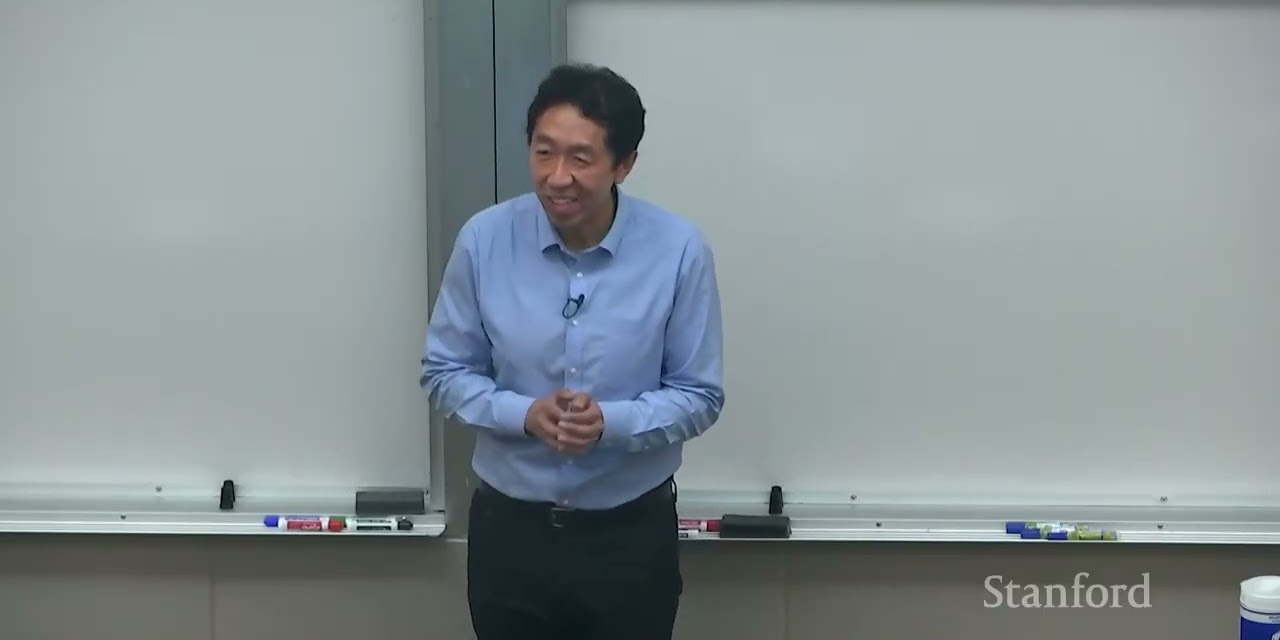
The job market for AI graduates looks brutal right now. Headlines scream about tech layoffs, hiring freezes, and a flood of talent competing for fewer positions. When Andrew Ng asked his Stanford CS230 class how many students were already job hunting, nearly every hand went up. When he asked how many had found success, the room fell silent.
Yet Ng insists this is actually the best time ever to build a career in AI. That contradiction deserves a closer look.
The Real State of AI Hiring
The current landscape is confusing. Junior level positions seem scarce. High profile companies that were hiring aggressively two years ago have pulled back. Competition feels fiercer than ever. But according to Lawrence Moroney, former lead AI advocate at Google and now at ARM, the problem isn't a lack of opportunities. It's a mismatch between what companies need and what candidates are showing them.
The pandemic created a hiring logjam. When AI exploded onto the scene in 2022 and 2023, every company scrambled to hire anyone with AI on their resume. This led to massive overhiring of underqualified people. Now we're in the correction phase. Companies are much more cautious, much more specific about the AI skills they actually need.
But here's what that really means. The jobs are still there. What's missing is candidates who understand how to demonstrate real value rather than just technical credentials.
Why This Is Actually a Golden Age
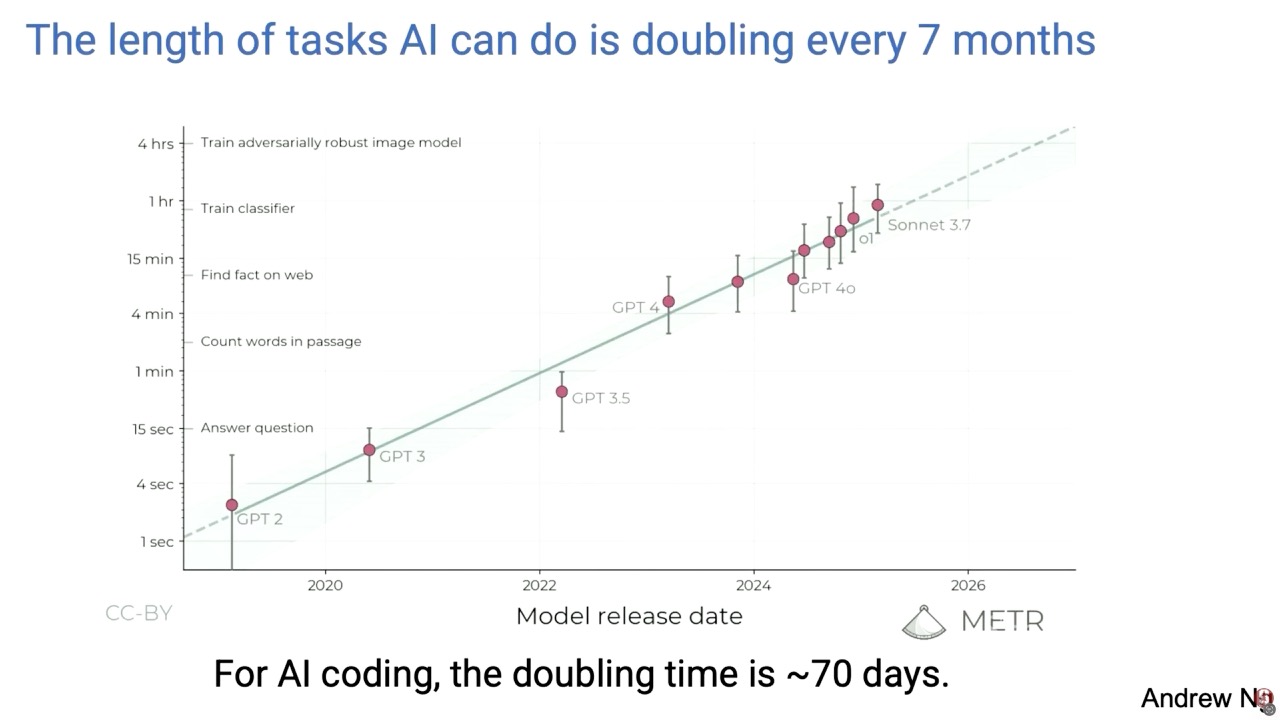
Ng presented research from Epoch AI that tracks how complex the tasks are that AI can accomplish. The measurement is simple: how long would it take a human to do this task? A few years ago, AI could handle tasks that took humans a couple of seconds. Then four seconds. Then eight seconds. Then a minute, two minutes, four minutes.
The study estimates that the length of tasks AI can handle is doubling every seven months. For coding specifically, that doubling time might be as short as 70 days.
This creates two fundamental shifts. First, you can now build software that is more powerful than anything anyone on the planet could have built a year ago. The building blocks available to you include large language models, retrieval augmented generation, voice AI, and deep learning frameworks that are increasingly accessible.
Second, you can build that software much faster than ever before. What used to take weeks can now take days or hours.
The Product Management Bottleneck
This speed creates an unexpected problem. When going from a clear specification to working code becomes trivially easy, the bottleneck shifts to figuring out what to build in the first place.
Traditional Silicon Valley wisdom said one product manager could keep four to eight engineers busy. That ratio is collapsing. Some teams Ng works with now propose headcounts of one product manager to one engineer, or even engineers who handle both roles themselves.
The reason is simple. AI has made the "write code" step much faster, but it hasn't made the "decide what to build" step any faster. So that decision making process now dominates your timeline.
Ng sees the fastest moving people in Silicon Valley today as engineers who also learned to talk to users, gather feedback, and develop deep empathy for what people actually need. They don't wait for someone else to write a specification. They build, show it to users, iterate based on feedback, and move to the next version.
This doesn't mean every engineer needs to become a product manager. Some people genuinely prefer pure technical work, and that's fine. But if you can do both, you eliminate a handoff. You move faster than teams that have to coordinate between separate people.
The People You Work With Matter More Than the Logo
Ng shared a cautionary tale about a Stanford student who did excellent work and got an offer from a company with a hot AI brand. The company refused to say which team the student would join. They promised a rotation system and said they'd figure out a good project after he signed.
The student joined, hoping to work on AI. After signing, he was assigned to the backend Java payment processing system. Nothing wrong with that work, but it wasn't AI. He spent a year frustrated and eventually left.
The lesson isn't about that specific company. It's about what actually determines your career growth. You don't learn from walking through a door with an exciting logo on it. You learn from the people you work with every day.
Ng recommends using this as your primary filter when evaluating opportunities. Who will you actually work with? What will you actually build? If a company won't tell you those things before you sign, that's a red flag.
Sometimes a company with a less prestigious brand but a great team working on real problems will teach you more and advance your career faster than a famous name where you get stuck on the wrong project.
What Companies Actually Want Now
The problem wasn't technical ability. Mock interviews revealed the issue. The candidate had read recruiting advice that said to stand your ground and show backbone when challenged. His interpretation of that advice made him come across as hostile when interviewers pushed back on his code or asked about edge cases.
From the interviewer's perspective, this person was technically brilliant but would be terrible to work with. No manager wants that on their team, no matter how skilled. After adjusting his approach to be more collaborative while still being confident, he got an offer and doubled his previous salary.
The shift in what companies want is broader than just interview style. Business focus is now non negotiable. For years, large tech companies emphasized bringing your whole self to work and supporting causes you care about. The pendulum swung too far. Now it's swinging back hard. Companies want people focused on delivering business value.
The Three Pillars of Success
Understanding in depth: This means two things. First, deep academic knowledge of machine learning, model architectures, and how to read and implement research papers. Second, having your finger on the pulse of trends and knowing where the signal to noise ratio favors actual signal over hype.
Business focus: Understanding what drives business value and aligning your output with that. Don't build for the job you have. Build for the job you want. When Moroney interviewed at Google the third time after failing twice, he built a Java application in Google Cloud that predicted stock prices. His entire interview became a conversation about code he had already written and understood deeply, rather than answering random questions blind.
Bias toward delivery: Ideas are cheap. Execution is everything. The ability to ship real things that solve real problems matters more than clever concepts that never leave your notebook.
Technical Debt and Generated Code
The rise of AI code generation doesn't make engineers less valuable. It makes skilled engineers more valuable, but it changes what that skill means.
Think about technical debt the way you think about financial debt. Taking out a mortgage to buy a house that will appreciate in value is good debt. Impulse purchases on a high interest credit card are bad debt.
Every time you build something, you take on technical debt. There will be bugs to fix, features to add, documentation to write, people to convince. The only way to avoid technical debt is to do nothing.
Generated code makes it incredibly easy to create things quickly. That's powerful. But it also makes it incredibly easy to take on bad technical debt without realizing it. Good technical debt comes from having clear objectives and meeting them. It comes from delivering business value. It comes from building things other people can understand and maintain.
Bad technical debt comes from generating code without understanding what problem you're solving. It comes from building solutions looking for problems. It comes from creating spaghetti code by prompting and re-prompting without clear direction.
The framework for responsible use of code generation tools:
Are your objectives clear and have you met them?
Is there real business value being delivered?
Can other humans understand what you built?
Filtering Signal from Noise
The AI field is drowning in hype. Social media rewards engagement, not accuracy. LinkedIn is full of influencers using AI to write engaging posts about AI so they can get more engagement about their posts about AI. The incentive structure creates a snowball of noise.
If you can filter signal from noise and help others do the same, you become incredibly valuable. This skill isn't as immediately tangible as likes on social media, but in one on one situations like job interviews or working on a team, it makes you stand out.
The salespeople were spending 80% of their time researching companies and prospects and only 20% actually selling. By building a system that automated the research, they saved 10 to 15% of that wasted time. Salespeople made more money, were happier, and the company got better results.
That came from asking why, understanding the actual problem, and ignoring the hype around whatever technology buzzword was trending that week.
The Coming Bifurcation
The AI industry is splitting into two paths. Big AI continues the push toward larger models and AGI, hosted by companies like OpenAI, Google, and Anthropic. Small AI focuses on models you can host yourself, fine tune for specific tasks, and run locally.
The big AI bubble might burst first. The small AI bubble will come later. But understanding both paths matters.
Small AI is particularly important for industries where privacy matters. Hollywood studios won't send their unreleased scripts to ChatGPT for analysis, no matter how good it is. They can't risk their IP. But they desperately want AI analysis to understand what makes movies successful.
Law offices, medical practices, and financial firms have the same constraint. Self hosted models that can be fine tuned for specific downstream tasks will be huge in these spaces. Skills in fine tuning, working with open weight models, and deploying AI on device or on premise are underserved right now. That's opportunity.
What to Actually Do
Ng's primary advice is simple. Go build things. The cost of failure is lower than ever. You might waste a weekend, but you'll learn something. The number of ideas in the world exceeds the number of people with skills to build them by a huge margin.
So long as you're being responsible and not harming others, you don't need permission. You don't need to wait for someone else to do it first.
Stay current with tools. AI coding tools are evolving faster than almost anything else in the field. Being half a generation behind makes you noticeably less productive. Ng's personal favorite tool has changed every three to six months. Right now he uses a mix of Claude and OpenAI Codex, but that will probably change again soon.
Work hard, but understand what that means. Hard work isn't about logging hours. It's about output. It's about building things. Ng jokes that he writes books during baseball season because baseball games are three and a half hours of slow action. Instead of watching mindlessly, he writes while the game is on in the background. That's hard work measured by what gets created, not by time spent.
Surround yourself with people who push you forward. Your five or ten closest friends shape who you become. If they're working hard, learning quickly, and trying to make things better, you're more likely to do the same. Stanford's advantage right now isn't just the faculty or the student body. It's the connective tissue to every major AI lab and company. Use that while you have it.
The Reality Check
The job market is tough. That's real. But the opportunity is also real.
Companies that overhired in 2022 and 2023 are now being more selective. They're looking for people who understand business value, who can ship real products, and who can work well with others. They're tired of people who just have AI buzzwords on their resume.
If you can demonstrate real ability to build things, if you can show you understand what matters versus what's just hype, and if you can work collaboratively, you'll stand out. The jobs exist. What's scarce is candidates who show these things clearly.
When you apply, don't just list skills. Show things you've built. Put working demos in your application. Make your output speak for the job you want, not the job you have.
When you interview, remember they're evaluating whether they want to work with you every day. Be confident but not arrogant. Stand your ground on technical points but stay collaborative. They want someone who makes the team better, not someone who's right all the time at everyone else's expense.
The Long View
Every technology goes through a hype cycle. The dot com bubble was massive, and it burst. But Amazon, Google, and other companies that focused on real value not only survived but thrived.
An AI bubble is probably coming. Companies doing AI right will be fine. People building real skills and delivering real value will be fine. The ones chasing hype and inflated valuations will struggle.
Focus on fundamentals. Build real solutions. Understand the business side. Diversify your skills so you're not a one trick pony dependent on a single framework or approach.
The bifurcation between big AI and small AI means opportunity in both directions. Understanding large language models and how to build with them matters. Understanding fine tuning, optimization, and deployment of smaller models also matters. Being able to work across that spectrum makes you more valuable.
Most importantly, stay curious. The field changes every few months. The best tool today won't be the best tool in six months. The hot topic today won't be the hot topic next year. Your ability to learn, adapt, and cut through noise to find what actually matters will serve you better than any specific technical skill.
Ng is right. This is still a golden age. Not because it's easy. It's not easy. But because the tools available to you right now let you build more powerful things faster than ever before in history. That creates opportunity if you know how to use it.